

After nearly 18 months of teaching piano lessons exclusively on Zoom, students this summer have gradually been returning to the studio for their lessons. I had become so accustomed to virtual lessons that I was almost surprised by how nice it was to once more teach in-person! The returning students are older, taller, and more mature. The students I have only known “virtually” are a bit nervous, but excited to meet me for the first time. Side-by-side, each of us at a piano, I can play along with them, watch their pedaling, and hear more closely the nuances of their sound. And how much easier it is to hear the sound up close, rather than strain to discern the sound through the distortion of less than ideal audio!
In addition to the ease of once again speaking to students face to face, we have been able to return to some of the tactile activities we used to do before the pandemic. With young beginners, especially, these activities are tremendously important. We toss a soft ball back and forth to loosen up the arms, and we march around the room to feel the musical pulse. Students are happy to once again decorate the giant grand staff on the floor with the note names. Pop-the-Pig is a new addition to the studio: students can feed the pig a hamburger every time they complete a task correctly! They love seeing the pig “pop” when they feed him enough times.
I am hopeful that we will be able to continue in-person lessons this year, although if we’ve learned anything, it is that things could change at any time. We’ve all become more versatile teachers this past year, and can add virtual lessons to our teaching toolbox. In the meantime, we are definitely going to enjoy having our students back in our studios!
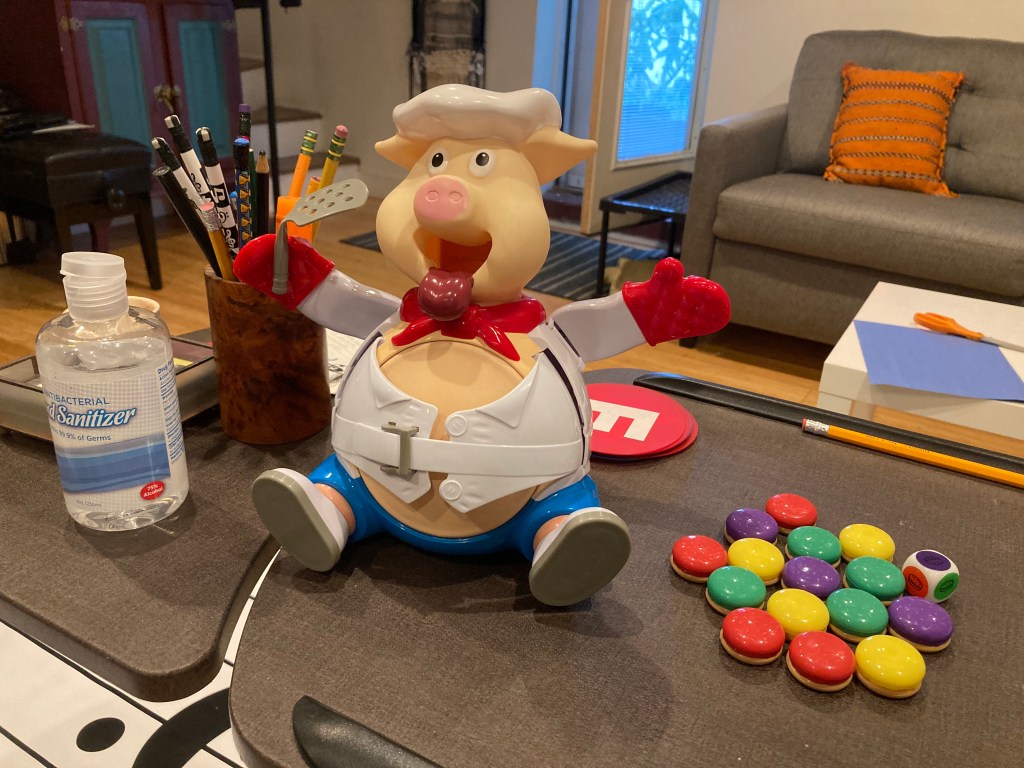
Pop-the-Pig motivates repetitions 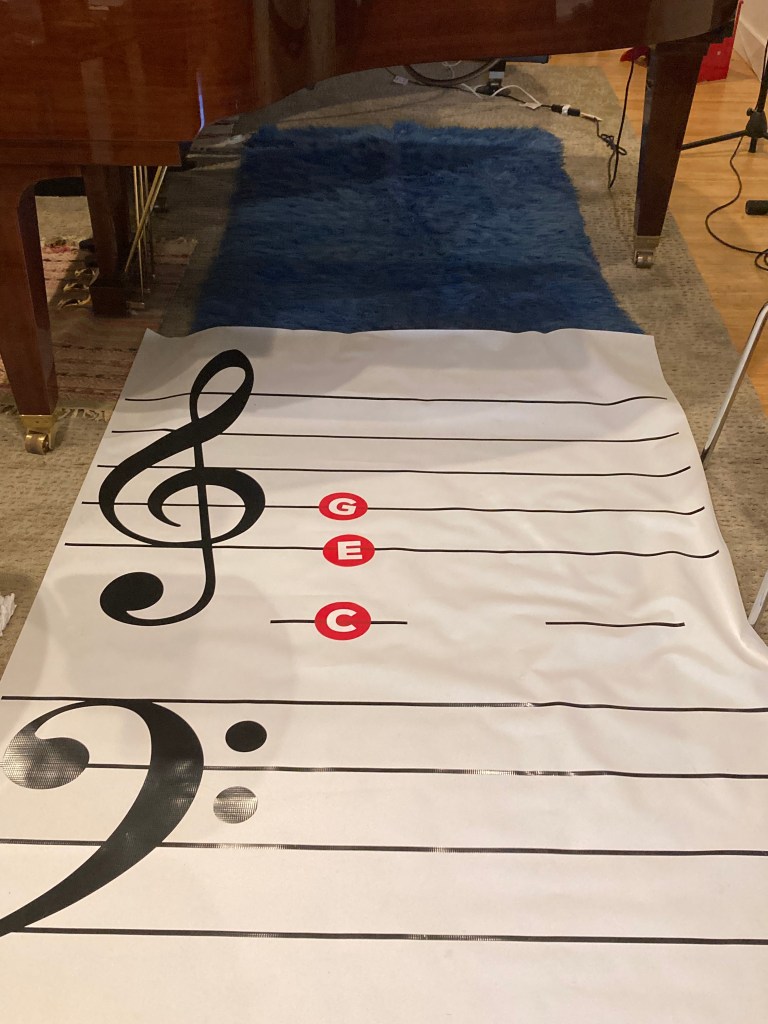
A C Chord on the Giant Staff 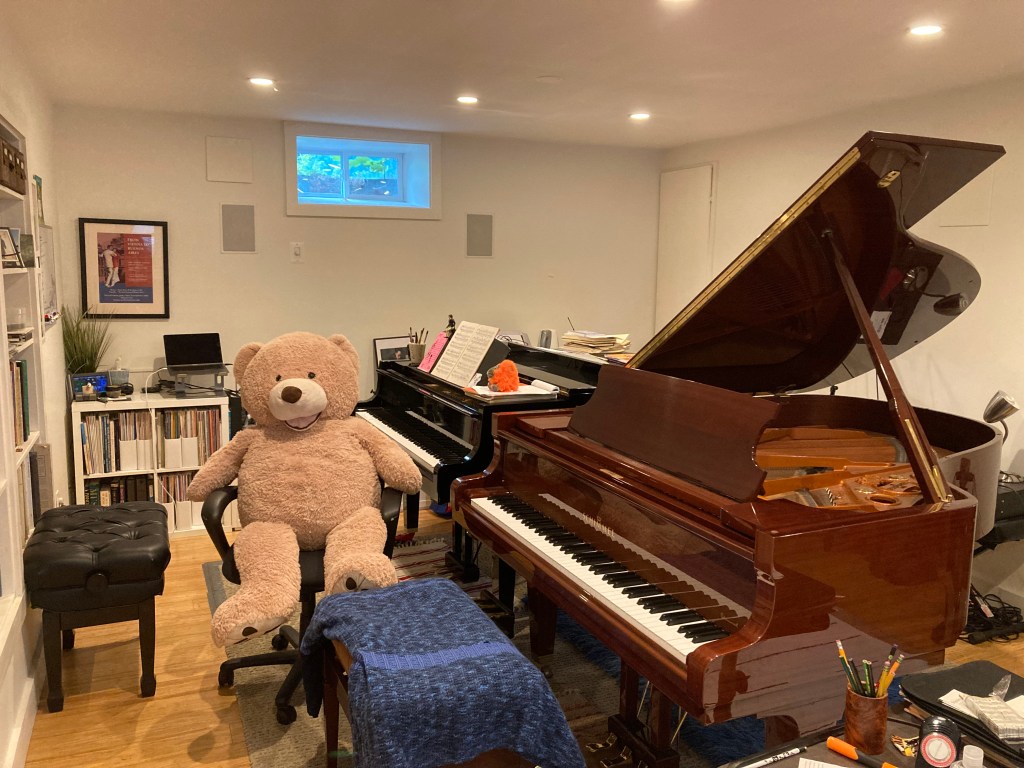
Cookie the Bear greets students on their first day 
A new student finds all of the “C’s”
 Sivan Etedgee